
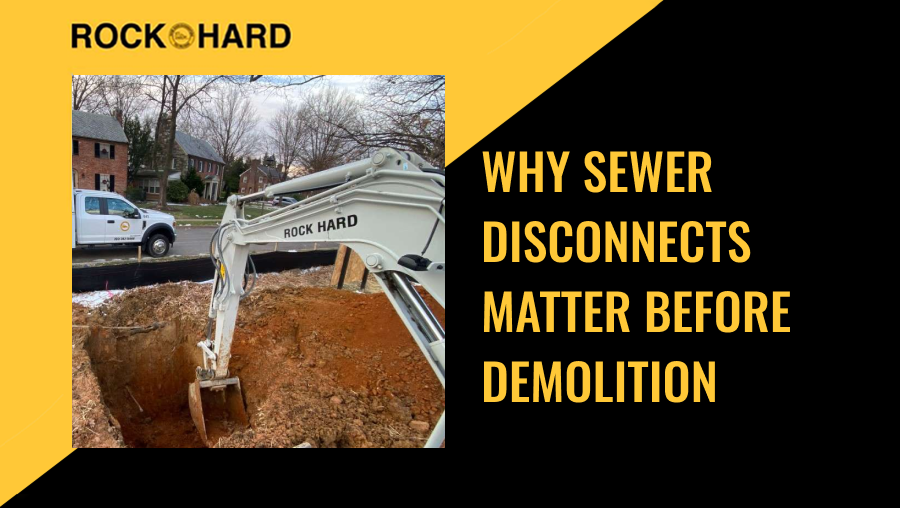
Before a single wall is torn down in a demolition project, one essential utility step must be taken: disconnecting the sewer line properly. Failing to do so can result in environmental hazards, legal issues, and costly repairs.
According to the EPA, an estimated 23,000–75,000 sanitary sewer overflows occur annually in the United States, often due to poor maintenance or improper disconnections. Many of these incidents happen during construction or demolition. This highlights the crucial importance of properly disconnecting sewer systems in both residential and commercial properties.
In this blog, we will explore why proper sewer disconnects matter before demolition, what the process involves, and how working with professionals can help you avoid major issues down the line.
What Is a Sewer Disconnect?
A sewer disconnect involves safely detaching a building’s lateral sewer line from the municipal or main sewer line. This step is mandatory before tearing down a structure to prevent raw sewage from leaking and to protect both public and private infrastructure.
Properly disconnecting the sewer prevents
- Backflow of sewage into the property
- Contamination of soil and groundwater
- Blockages in the main sewer line
- Potential injuries from sudden sewage bursts
Most municipalities in Northern Virginia and beyond legally require this service before any permitted demolition.
When Do You Need a Sewer Disconnect?
Although typically required before a demolition, sewer disconnects are also necessary in the following situations:
- Major renovations involving plumbing changes or foundation work
- Property redevelopment, where the old sewer line will be replaced
- Relocation of sewer service lines within a property
How Sewer Disconnects Are Performed: Step-by-Step Process
A sewer disconnect isn’t as simple as cutting a pipe. It’s a technical, code-driven process that varies depending on site conditions and municipal requirements.
Here’s how professionals typically perform the service:
1. Inspection and Permits
Before starting, a sewer camera may be used to assess the system. Permits are filed with the local jurisdiction (e.g., Arlington, McLean, or Alexandria), and the public utility lines are located to avoid damage.
2. Excavation to Access the Lateral Line
Contractors excavate near the property boundary to expose the lateral connection leading to the municipal sewer line.
3. Capping the Sewer Line
The lateral pipe is cut and capped, usually with a watertight, code-approved fitting. This prevents sewage leaks and protects the mainline from debris during demolition.
4. Inspection and Documentation
Some jurisdictions require post-disconnection inspections to ensure the work meets the required standards. Documentation is often needed before demolition permits are issued.
5. Backfill and Site Restoration
The excavated area is safely backfilled to avoid sinkholes or other hazards.
Risks of Skipping or Improperly Handling Sewer Disconnects
Improper or skipped sewer disconnects can have serious consequences.
-
Sewage Backups
Waste can spill back into the property or flow into neighboring lines.
-
Contaminated Soil
Raw sewage seeps into the ground, creating environmental hazards.
-
Legal Liability
You may face fines or stop-work orders from local authorities.
-
Delays
Without proper sewer disconnect documentation, your demolition permits may be denied or revoked.
In short, failing to do this right could cost thousands and delay your entire project.
The Role of Sewer Reconnects After Demolition or Renovation
After a property is rebuilt or renovated, the previously capped line can be reconnected, provided it’s still in good condition.
A sewer reconnect involves
- Sawing off the old cap
- Inspecting the existing line with a sewer camera
- Connecting a new pipe to the municipal line
- Descaling or hydro jetting the pipe if needed
This process is just as precise as a disconnect and must meet municipal plumbing and environmental codes.
Who Should Perform Sewer Disconnects?
While it may seem like a simple task, only trained, licensed professionals should handle sewer disconnects. These jobs require
- Knowledge of local codes and permitting processes
- Access to trenching and pipe-cutting tools
- Experience with excavation and safety standards
- Coordination with municipal sewer departments
DIY disconnects are dangerous, illegal in most places, and likely to result in fines or environmental damage.
Why Proper Sewer Work Is a Long-Term Investment
Though it’s often one of the first tasks in demolition, sewer work shouldn’t be treated as an afterthought. A well-done disconnect and reconnect can
- Reduce future plumbing issues
- Lower risk of contamination
- Speed up permitting and inspections
- Save money on unplanned repairs
Think of it as insurance for both your current project and your property’s long-term integrity.
Trust Rock Hard Excavating for Professional Sewer Services in Northern Virginia
For homeowners and contractors in Northern Virginia, Rock Hard Excavating provides professional, code-compliant sewer services that include:
- Sewer disconnects before demolition or renovation
- Sewer reconnects for redeveloped or remodeled properties
- New sewer system installation
- Sewer camera inspections, descaling, and hydro jetting
With over 45 years of experience and a deep understanding of local regulations, we ensure every sewer project is handled safely, legally, and efficiently. Whether you’re planning a teardown, addition, or full renovation, proper sewer work should be your first step. The professional sewer experts at Rock Hard Excavating are here to help.
Contact us today to discuss your project needs.
Frequently Asked Questions
1. Is a sewer disconnect required before demolishing a house?
Yes, most local jurisdictions require a sewer disconnect before demolition to prevent contamination and protect municipal lines.
2. How long does a sewer disconnect take?
Depending on site conditions, most sewer disconnects can be completed within 1–2 days, including excavation, capping, and backfilling.
3. Can I reconnect to the old sewer line after rebuilding?
Yes, if the existing line is in good condition. A sewer camera inspection will help determine if a reconnect is viable.
4. Who handles permits for sewer disconnects?
At Rock Hard Excavating, we typically handle all permitting and coordinate with local authorities.
5. What happens if I skip the sewer disconnect?
You risk fines, project delays, sewage spills, and potential damage to neighboring properties. It’s illegal in most areas to proceed without it.