
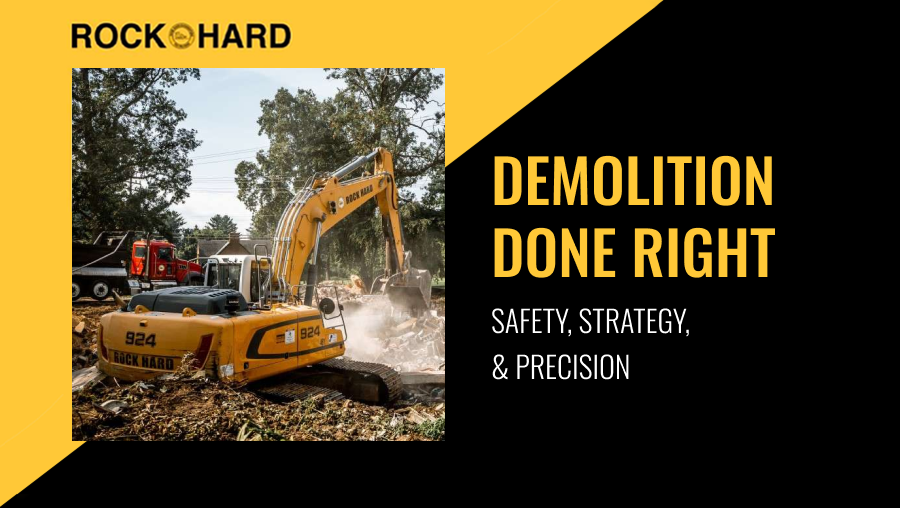
When it comes to demolition, success begins long before the first wall comes down. Whether you’re clearing land for new construction or removing an outdated structure, every project requires planning, expertise, and the right equipment.
Demolition isn’t one-size-fits-all. Residential and commercial projects demand different levels of skill and coordination. Understanding those differences helps property owners choose the right demolition contractor for their specific needs.
What Sets Residential Demolition Apart?
Residential demolition typically involves tearing down smaller structures such as:
- Single-family homes
- Garages and sheds
- Patios, driveways, and decks
- Small apartment buildings
A house demolition contractor must prioritize neighborhood safety and minimize disruption. Homes often sit close together, so contractors need to take precautions to protect nearby properties from vibration, dust, and debris.
Before demolition begins, professionals disconnect utilities, manage permits, and handle hazardous materials like asbestos if present. They also plan for debris disposal and site cleanup, ensuring the area is safe and ready for new construction.
Even a small home demolition requires specialized machinery and skilled operators to ensure efficiency and safety. Choosing an experienced contractor can make the process faster, cleaner, and more cost-effective.
How Commercial Demolition Differs
Commercial demolition projects are typically larger, more complex, and heavily regulated. They include structures like:
- Office buildings and retail centers
- Schools, hospitals, and hotels
- Industrial warehouses and factories
A commercial demolition contractor must handle intricate challenges such as structural engineering assessments, hazardous material removal, and environmental compliance.
These projects often require:
- Heavy-duty equipment like excavators, cranes, and hydraulic breakers
- Advanced safety planning and traffic management
- Coordination with local authorities for permits and inspections
- Recycling and waste management for large-scale debris removal
Commercial demolition can also involve selective or interior demolition, removing specific parts of a structure while keeping others intact. This precision work requires expertise and advanced tools to ensure the integrity of surrounding areas.
Why Professional Demolition Contractors Matter
Hiring a professional demolition contractor isn’t just about efficiency. It’s about ensuring the job is done safely, legally, and responsibly.
Here are key reasons why professional expertise is essential:
1. Safety Comes First
Demolition involves risks such as falling debris, dust exposure, and structural instability. Professionals follow strict safety regulations and use protective equipment to prevent accidents and injuries.
2. Efficient Project Management
Experienced contractors plan each phase carefully, from utility disconnection to debris removal. Their use of modern machinery speeds up the process without compromising safety or precision.
3. Legal and Environmental Compliance
Demolition requires permits, waste disposal documentation, and environmental approvals. Professionals understand local laws and handle compliance seamlessly, preventing costly delays.
4. Cost and Time Savings
Attempting a DIY demolition or hiring unqualified contractors can lead to expensive mistakes. Professionals complete the job faster, saving time and avoiding unnecessary expenses.
5. Responsible Waste Disposal
After demolition, contractors handle debris sorting, recycling, and disposal. This not only ensures a clean site but also minimizes environmental impact.
Planning for a Smooth Demolition Project
Before starting a demolition, property owners should take several preparatory steps to ensure smooth execution:
- Assess the structure: Identify materials like asbestos or lead paint that may require special handling.
- Obtain necessary permits: Work with your contractor to secure local demolition permits.
- Plan for utility disconnection: Ensure all water, gas, and electricity lines are safely turned off.
- Set realistic timelines: Discuss the project scope, expected duration, and cleanup schedule with your contractor.
- Prepare for site cleanup: A professional team will leave your property ready for construction or landscaping.
By following these steps, you’ll minimize disruptions and ensure your project stays on schedule.
Choosing the Right Demolition Contractor
Selecting the right contractor is crucial to the success of your demolition project. Look for companies with:
- Proven experience in both residential and commercial demolition
- A solid safety record and proper certifications
- Transparent pricing and clear communication
- Access to modern, well-maintained equipment
- Positive local reviews and references
Whether you’re removing a home, an office building, or a warehouse, a qualified contractor will guide you through the process from start to finish, safely, efficiently, and responsibly.
Trusted Demolition Experts in Arlington, VA
If you’re looking for dependable demolition services, Rock Hard Excavating brings decades of expertise to every project. As a family-owned business serving Northern Virginia, we offer residential and commercial demolition, with a strong focus on safety and customer satisfaction.
Our services extend beyond demolition to include excavation, land clearing, site utility installation, and stormwater management, making us a one-stop solution for all site preparation needs.
When you choose Rock Hard Excavating, you’re partnering with a team that values professionalism, precision, and environmental responsibility. From permit handling to final cleanup, we ensure your site is cleared safely and ready for what’s next.
Contact us today to discuss your site needs for a free, no-obligation estimate.
Frequently Asked Questions
1. How long does a typical demolition project take?
The duration depends on the type and size of your project. A standard residential demolition usually takes between 3–7 days, while larger commercial demolitions can take several weeks. We always begin with a detailed site assessment to provide you with a clear and accurate project timeline.
2. Do I need to obtain a demolition permit myself?
No, you don’t have to worry about that. Our team handles all necessary permits and approvals for demolition projects in Arlington and nearby areas. We coordinate directly with local authorities to make sure your project meets every legal and safety requirement before work begins.
3. What happens to the debris after demolition?
We manage the entire debris removal process. Materials like concrete, metal, and wood are sorted for recycling whenever possible. We follow eco-friendly disposal practices to reduce landfill waste and leave your site clean and ready for its next stage of development.
4. Can you perform a partial demolition instead of removing the entire structure?
Yes, absolutely. We specialize in selective or partial demolitions for renovation or expansion projects. Our team carefully removes specific sections of a structure while preserving the areas you want to keep intact, ensuring precision and safety throughout the process.
5. How can I prepare my property before demolition starts?
Before demolition day, we recommend disconnecting utilities, removing personal belongings, and identifying any elements you’d like preserved, such as trees, fences, or landscaping. Our project manager will walk you through all necessary pre-demolition steps to make the process seamless and stress-free.