
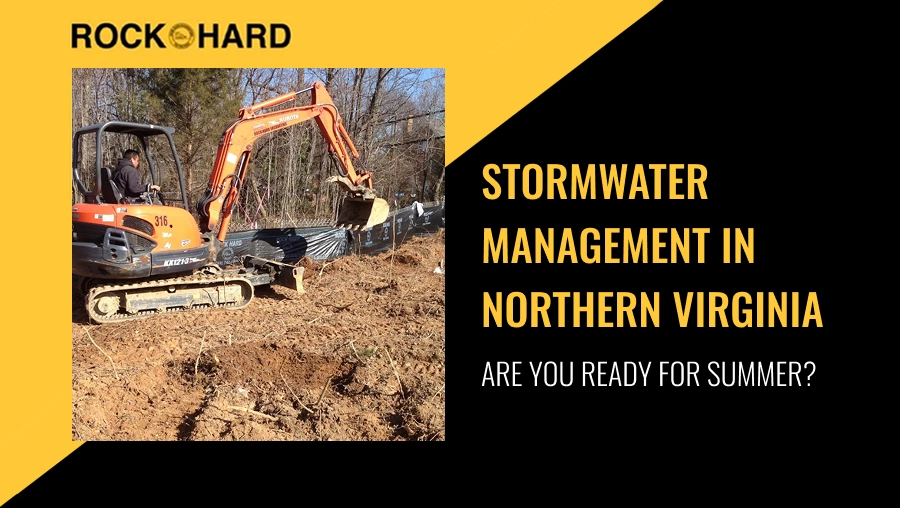
Summer in Northern Virginia announces itself with a familiar pattern: rising humidity, sudden downpours, and rainfall events that arrive quickly and leave lasting damage. For property owners across the region, investing in professional stormwater management services in Northern Virginia before the season begins is one of the most practical decisions you can make.
Without a functioning drainage system, even a single heavy storm can cause flooding, erosion, and costly structural damage. Partnering with a trusted stormwater management company that property owners can rely on is the smartest first step you can take this season.
Why Northern Virginia properties face higher stormwater risks in summer
Northern Virginia sits within the Chesapeake Bay Watershed, which means stormwater runoff carries consequences far beyond your property line. Local and state regulations actively govern how runoff is managed on developed land, and for good reason.
When rainfall hits impervious surfaces like driveways, rooftops, and compacted soil, it moves fast, picking up sediment, debris, and pollutants along the way.
Without properly maintained systems, that runoff can:
- Cause severe soil erosion and destabilize slopes or embankments
- Flood basements, crawlspaces, and low-lying areas of your property
- Damage existing drainage infrastructure through excessive water volume
- Lead to a stormwater notice of violation from local authorities
- Harm surrounding wetlands, streams, and the broader watershed environment
This is precisely why pre-summer preparation matters, and why it should never be left until the first storm has already done its damage.
Stormwater problems that often go unnoticed until it’s too late
Most property owners don’t give their drainage systems a second thought until water is pooling near their foundation or backing up across the yard. By that point, the cost of reactive repairs is significantly higher than it would have been with preventive maintenance.
Some of the most commonly overlooked issues include:
- Blocked drainage inlets: Leaves, mulch, and debris build up in inlet grates through fall and winter. A single blocked inlet can redirect substantial water flow in the wrong direction during a summer storm.
- Deteriorating swales and channels: Swales are designed to carry surface water safely away from structures. Over time, they erode, become overgrown, or shift, losing their effectiveness entirely.
- Failed bioretention systems: Bioretention areas use soil and plant material to naturally absorb and filter runoff. If the vegetation is dead or the soil has compacted, the system is no longer doing its job.
- Poor grading: If the slope of your land directs water toward your foundation rather than away from it, no drainage feature will fully compensate for that underlying problem.
What a pre-summer stormwater inspection should cover
Scheduling a professional inspection before summer is the most reliable way to identify problems before they become emergencies. A qualified stormwater management company will evaluate:
- Inlet and outlet condition: Are the grates clear? Are pipes free from blockages, root intrusion, or structural damage?
- Surface grading: Does water drain away from the structure across all areas of the property?
- Swale and channel integrity: Are these features functioning as designed or have they degraded over the winter months?
- Bioretention system health: Is vegetation alive, and soil properly absorbing water?
- Erosion indicators: Are there visible signs of soil movement near drainage channels or disturbed ground?
- Regulatory compliance: Does the existing system meet current Northern Virginia stormwater ordinance requirements?
Catching these issues now gives you the time and budget to address them properly, before the first major storm of the season forces your hand.
Understanding stormwater compliance in Northern Virginia
Counties across Northern Virginia, including Fairfax, Arlington, and Prince William, enforce stormwater regulations under the Chesapeake Bay Preservation Act and their respective county ordinances. These rules govern how runoff is controlled and treated on developed properties, and violations are taken seriously.
A stormwater notice of violation can result in fines, mandatory remediation timelines, and required compliance documentation. The best way to avoid that outcome is to ensure your stormwater management services are up to date and your infrastructure is functioning correctly before summer storm season begins. If you’ve already received a violation notice, acting promptly with professional support is the most effective way to resolve the issue.
Steps property owners can take right now
While a professional inspection remains the most thorough approach, there are immediate steps you can take to flag potential issues before your assessment:
- Walk your property during or after a moderate rainfall and observe where water collects or flows unnaturally
- Clear any visible debris from surface drainage inlets
- Look for signs of erosion near slopes, drainage channels, or recently disturbed ground
- Note any areas where standing water remains more than 24 to 48 hours after rainfall
- Review any previous inspection reports or violation notices for unresolved items
These observations are valuable to include in your professional assessment and to help ensure nothing is missed during the inspection process.
Why Choose Rock Hard Excavating for Stormwater Management Services
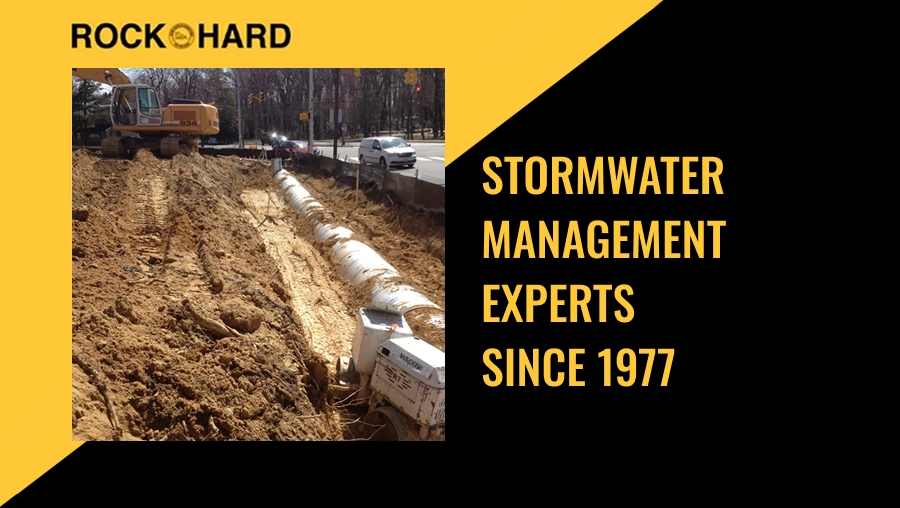
Rock Hard Excavating has been a trusted, family-owned, second-generation business since 1977, delivering reliable stormwater and site work solutions for residential builders and commercial general contractors across Northern Virginia. We bring unmatched regional knowledge and a genuine commitment to results that last.
We offer comprehensive stormwater management services, including new construction installs, inspections, maintenance, repairs, bioretention systems, compliance guidance, and complete site utility services.
Beyond stormwater, we also provide demolition, excavation, land clearing, helical pile installation, dumpster roll-off rental, septic tank services, sewer and water services, and much more.
Summer storms do not wait, and neither should you. Contact us today for a free estimate and make sure your property is fully prepared before the season arrives.
FAQs
1. What stormwater management services does Rock Hard Excavating offer?
Rock Hard Excavating provides new construction stormwater installs, inspections, maintenance, repairs, bioretention systems, compliance guidance, and complete site utility services integrated with stormwater solutions. We serve both residential builders and commercial general contractors across Northern Virginia.
2. What areas does Rock Hard Excavating serve for stormwater management?
Rock Hard Excavating serves Fairfax County, Arlington County, Prince William County, Loudoun County, Clarke County, Frederick County, the City of Falls Church, Alexandria, Fairfax, Reston, Arlington, McLean, Vienna, and surrounding counties and cities in Northern Virginia.
3. What should I do if I receive a stormwater notice of violation in Northern Virginia?
You should act quickly. Contact Rock Hard Excavating to assess your property, identify the cause of the violation, and implement the required corrective measures within the compliance timeline set by your local authority.
4. Does Rock Hard Excavating handle sewer and water services in addition to stormwater management?
Yes. Rock Hard Excavating offers a full range of sewer and water services, including sewer disconnects, sewer reconnects, new sewer installation, sewer cap-off services, septic tank services, pipe descaling, hydro jetting, and video inspection services.
5. How often should stormwater infrastructure be inspected on a residential or commercial property?
Annual inspections are generally recommended, with an additional pre-summer check especially important in Northern Virginia due to the region’s heavy spring and summer rainfall. Properties with known drainage issues or those that have received prior violation notices may benefit from more frequent assessments.