

Every successful construction project begins long before the first foundation is poured. It starts with preparing the land, which sets the stage for every subsequent phase of development. Proper site preparation is essential to ensure safety, efficiency, and compliance with local regulations. It also helps prevent costly delays, structural issues, and environmental problems in the long run.
The foundation of this process is land clearing. It is a crucial step that removes obstacles, mitigates risks, and sets the stage for a smooth development process. Partnering with a professional land clearing contractor ensures your project begins on solid ground.
What Is Land Clearing?
Land clearing involves removing trees, vegetation, rocks, debris, and sometimes existing structures to prepare a site for construction. It’s not just about cutting down trees; it’s a comprehensive process that includes grading, soil stabilization, and erosion control to make the land safe and buildable.
Whether you’re planning to build a new home, expand commercial space, or develop infrastructure, proper land clearing creates the clean slate you need to move forward.
Why Land Clearing Matters in Development
1. Ensures Safety
Uncleared land poses safety hazards like unstable soil, dead trees, and hidden debris. Clearing reduces risks for workers and equipment, creating a safer job site.
2. Maximizes Land Usability
By removing obstacles, you maximize the usable space for construction, landscaping, or utilities. This allows for better planning and efficient use of every square foot.
3. Prevents Future Problems
Leaving tree roots, stumps, or poor grading can lead to drainage issues, structural instability, and even pest infestations. Proper land clearing addresses these risks upfront.
4. Improves Site Access
Clearing a site provides easy access for construction vehicles, delivery trucks, and crews, ensuring work progresses smoothly without unnecessary delays.
5. Supports Environmental Compliance
Professional land clearing services often include erosion control and stormwater management. These practices prevent sediment runoff into waterways and comply with local regulations.
Steps in the Land Clearing Process
Step 1: Site Assessment
The process begins with evaluating the land. Contractors assess topography, soil type, vegetation density, and any potential hazards. They also consider zoning laws, permits, and environmental impact.
Step 2: Tree and Vegetation Removal
Large trees, shrubs, and underbrush are removed to open up the space. Contractors utilize specialized machinery, such as bulldozers, excavators, and mulchers, for efficient clearing.
Step 3: Stump and Root Removal
Leaving stumps or roots can compromise the stability of future construction. Stump grinders or excavators ensure these are fully removed.
Step 4: Rock and Debris Clearing
Boulders, construction waste, and other debris are removed to create a smooth and workable surface.
Step 5: Grading and Leveling
Once cleared, the site is graded to ensure proper drainage. This prevents water pooling and future erosion.
Step 6: Erosion Control Measures
Silt fences, straw mats, or vegetation planting may be installed to protect soil integrity during construction.
Tools and Equipment Used in Land Clearing
Land clearing requires advanced equipment for efficiency and safety. Common tools include:
- Bulldozers: Push large amounts of debris and vegetation.
- Excavators: Remove stumps, roots, and rocks.
- Mulchers: Grind vegetation into mulch for eco-friendly disposal.
- Chainsaws and Chippers: Handle smaller trees and brush.
- Roll-Off Dumpsters: Collect and remove debris from the site.
Hiring a professional land clearing contractor ensures access to these resources and the expertise to use them properly.
Environmental Considerations in Land Clearing
Modern land clearing isn’t just about removing obstacles; it’s also about sustainability.
- Selective Clearing: Removing only what’s necessary to preserve healthy trees and habitats.
- Erosion Control: Installing measures to prevent runoff and soil degradation.
-
Recycling Materials: Converting cleared wood into mulch or timber for reuse.
- Habitat Awareness: Considering wildlife impact and relocating when necessary.
Responsible land clearing protects both the property and the surrounding ecosystem.
Benefits of Professional Land Clearing Services
- Time Savings: Professionals complete projects faster with the right equipment.
- Cost Efficiency: Proper preparation prevents expensive fixes later.
- Regulatory Compliance: Contractors understand permits and codes.
- Expertise: Skilled teams handle unexpected challenges effectively.
Attempting DIY land clearing may seem cost-effective, but it often results in incomplete preparation and hidden risks. A professional team ensures the job is done right the first time.
Rock Hard Excavating: Your Partner in Site Preparation
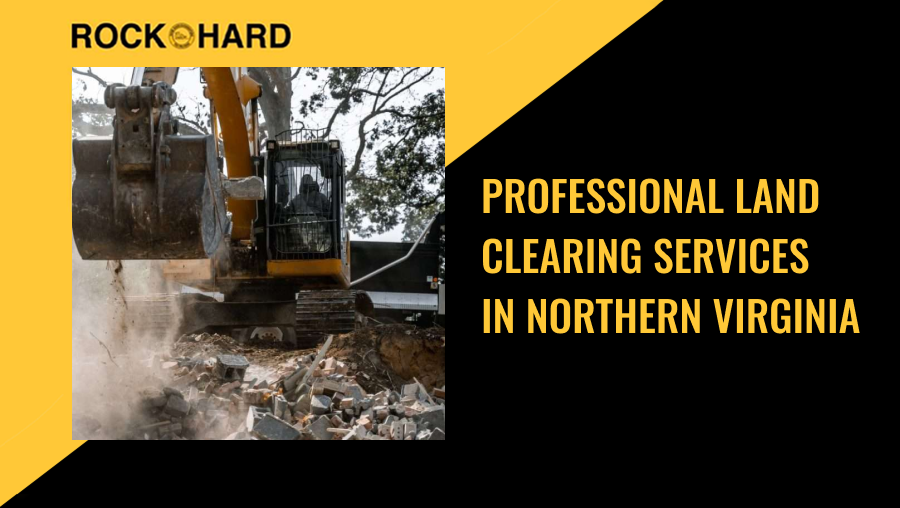
At Rock Hard Excavating, we’ve provided expert land clearing services across Northern Virginia for over 45 years. Our team handles everything from vegetation removal to grading and erosion control, ensuring your site is safe, compliant, and ready for development.
As a family-owned, second-generation company, we take pride in our professionalism, local expertise, and strong reputation built on client satisfaction. Whether you’re a homeowner, builder, or commercial contractor, we provide the foundation for your success.
Contact us today to schedule a FREE consultation.
Frequently Asked Questions
1. How long does land clearing take?
The timeline depends on property size, vegetation density, and project requirements. Most residential lots take a few days, while larger commercial projects may take weeks.
2. Do I need permits for land clearing?
Yes, many counties in Northern Virginia require permits, especially if trees, wetlands, or grading are involved. A professional contractor helps secure necessary approvals.
3. What happens to the cleared debris?
Debris is typically hauled away using dumpsters, recycled into mulch, or disposed of responsibly according to local regulations.
4. Is land clearing environmentally friendly?
With modern practices like selective clearing, erosion control, and recycling, land clearing can be performed with minimal environmental impact.
5. How do I choose the right land clearing contractor?
Look for experience, proper licensing, proper equipment, and a proven track record of successful projects in your area. Local expertise is particularly valuable.