
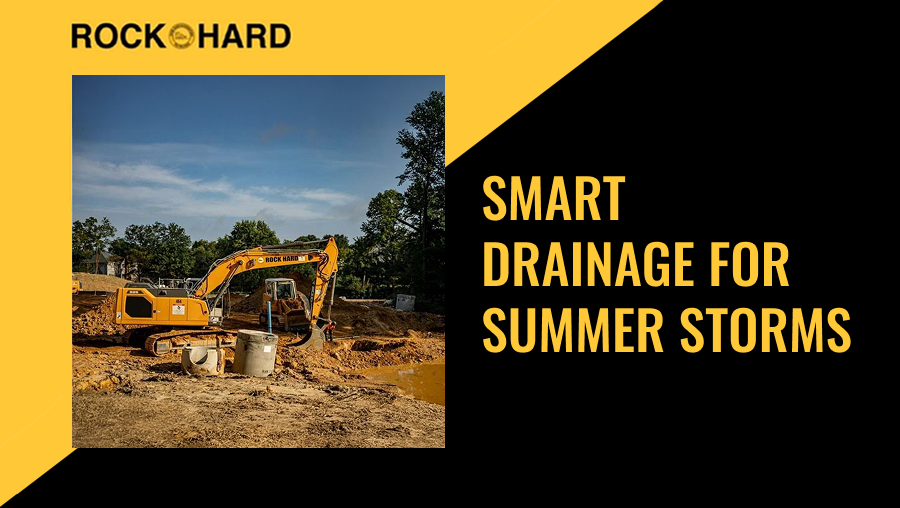
Late-summer thunderstorms can bring sudden, heavy rainfall, sometimes dumping 1–3 inches in under an hour, which exceeds the absorption capacity of most yards and sites. Chances of flash flooding in urban and suburban areas increase significantly during these months.
Unmanaged stormwater can lead to soil erosion, water pooling, basement flooding, and even structural and landscaping damage. That’s why smart stormwater drainage solutions are essential, especially in regions like Northern Virginia.
Whether you’re a homeowner, contractor, or property manager, understanding and implementing stormwater management solutions is crucial to safeguarding your assets and meeting regulatory standards.
Understanding Stormwater Runoff and Its Risks
Stormwater runoff occurs when precipitation flows over land surfaces instead of being absorbed into the ground. In natural settings, most rainfall infiltrates the soil, replenishing groundwater and supporting ecosystems. However, in urban or developed areas, paved surfaces, such as roads, driveways, and rooftops, disrupt this process.
Key risks associated with unmanaged stormwater runoff include
- Flash flooding that damages property and infrastructure
- Soil erosion that weakens building foundations and landscaping
- Water pollution from debris, oils, and chemicals washing into water systems
- Regulatory violations for properties not in compliance with municipal stormwater standards
Signs Your Property Needs Stormwater Drainage Solutions
Late-summer rains often reveal weak spots in your property’s drainage. Watch for the following warning signs.
- Pooling water around your home’s foundation
- Soggy or eroded landscaping
- Mold or mildew growth on exterior walls
- Overflowing gutters and downspouts
- Flooded driveways or walkways
Ignoring these signs can lead to long-term structural damage and steep repair bills. Early intervention is key.
Effective Stormwater Management Solutions to Consider
1. French Drains and Dry Wells
These underground drainage systems capture excess surface water and direct it safely into the ground or designated outflows. Ideal for yards with moderate flooding issues, they are both cost-effective and discreet.
2. Bioretention Systems and Rain Gardens
Bioretention basins use soil, mulch, and vegetation to naturally filter pollutants and slow down runoff. Rain gardens, a smaller variant, are excellent for residential properties and reduce pressure on municipal drainage systems.
3. Permeable Pavements
Unlike conventional asphalt or concrete, permeable pavements allow rainwater to filter through their surface, reducing runoff. These are especially effective in driveways, walkways, and parking lots.
4. Swales and Grading
Shaping the landscape to redirect water flow is a low-tech but highly effective way to manage runoff. Swales are shallow, vegetated channels that carry water away from structures and toward safe drainage zones.
5. Retention and Detention Ponds
Larger properties, especially in commercial or HOA settings, often benefit from retention or detention ponds that temporarily hold stormwater, allowing for gradual release and natural filtration.
Designing an Effective Drainage Strategy
Assess Your Site Conditions
Evaluate terrain slopes, current flow patterns, soil type, and proximity to structures to identify trouble spots.
Balance Flow, Infiltration, and Discharge
Combine surface and subsurface solutions to reduce runoff and direct it toward natural drainage points or municipal systems.
Ensure Regulatory Compliance
Local codes in Northern Virginia require specific runoff mitigation measures—especially for new construction or major renovations.
Maintain Your System
Seasonal inspections and clearing debris ensure drains and inlets remain functional during storm seasons.
Benefits of Proactive Drainage Planning
- Flood Prevention: Avoid costly water damage to basements, landscaping, and foundations.
- Erosion Control: Preserve soil integrity and protect plantings.
- Regulatory Assurance: Meet local stormwater ordinances and avoid penalties.
- Environmental Protection: Reduce pollutants flowing into waterways by managing runoff properly.
Integrating Drainage with Utility & Site Work
Smart stormwater design should dovetail with utility and site-prep services:
-
Coordinate Trenches and Piping
Plan drainage lines alongside sewer or water infrastructure to ensure smooth installation.
-
Grade & Slope Integration
Use grading contracts to direct water flow toward drains and away from structures.
-
Holistic Site Planning
Combine septic, sewer, foundation, and drainage installations in cohesive phases for efficiency and precision.
When DIY Is Not Enough: Professional Installation Matters
While homeowners can tackle minor drainage fixes (e.g., French drains), larger systems, especially those tied to regulation compliance, should be handled by experts. Professional companies bring
- Accurate site assessments based on soil testing and local code knowledge.
- Proper permitting and inspection support.
- Specialized equipment for precise trenching, depositing, and system installation.
Rock Hard Excavating: Stormwater Solutions That Work
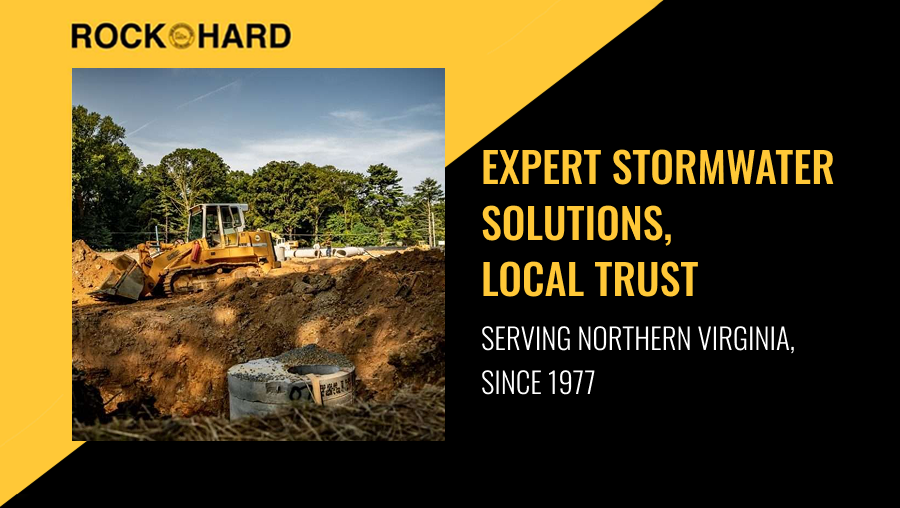
As one of the most trusted stormwater management companies in Northern Virginia, Rock Hard Excavating brings over four decades of experience in safeguarding properties from stormwater damage.
From installing bioretention systems to repairing aging infrastructure, our holistic approach ensures your site remains compliant, functional, and environmentally responsible, even during late-summer downpours.
Whether you need a system for a new construction project or help repairing a flooded yard, our team is ready to provide customized stormwater management solutions that last.
Get in touch with us to schedule a free consultation and discover how our stormwater solutions can help your property weather the storm.
Frequently Asked Questions
1. What’s the difference between a French drain and a catch basin?
A French drain is an underground trench system that directs water along a slope, while a catch basin is a grated inlet that captures water and connects to a piping system. French drains manage subsurface flow; catch basins handle surface runoff.
2. How do I know if my yard needs a bioretention garden or a dry well?
Bioretention works well in areas with moderate saturation and space for planting. Dry wells suit compact areas needing underground infiltration. A soil percolation test and site slope analysis help determine which solution is the best fit.
3. Do I need permits for drainage installations in Northern Virginia?
Often yes, especially for systems that discharge to public storm drains or alter runoff paths. Working with a licensed stormwater company ensures permit compliance and proper documentation.
4. How much does a typical drainage system cost?
Installation costs vary based on system size, soil conditions, and materials. Small French drain systems may cost a few thousand dollars, while full-site bioretention or swale installations can range significantly higher. Request quotes from reputable contractors for accurate estimates.
5. How important is ongoing maintenance?
Regular maintenance is essential. Grates, pipes, or plant-based systems can clog with debris or sediment, reducing effectiveness. Annual or seasonal inspections help prevent backups or erosion damage.